Museum reference
The surviving throne of Maharaja Ranjit Singh
Use a licensed museum image or an image allowed for publication.
Страница материала
17:13 Maharaja Ranjit Singh — A One-of-a-Kind Custom Miniature | |
|
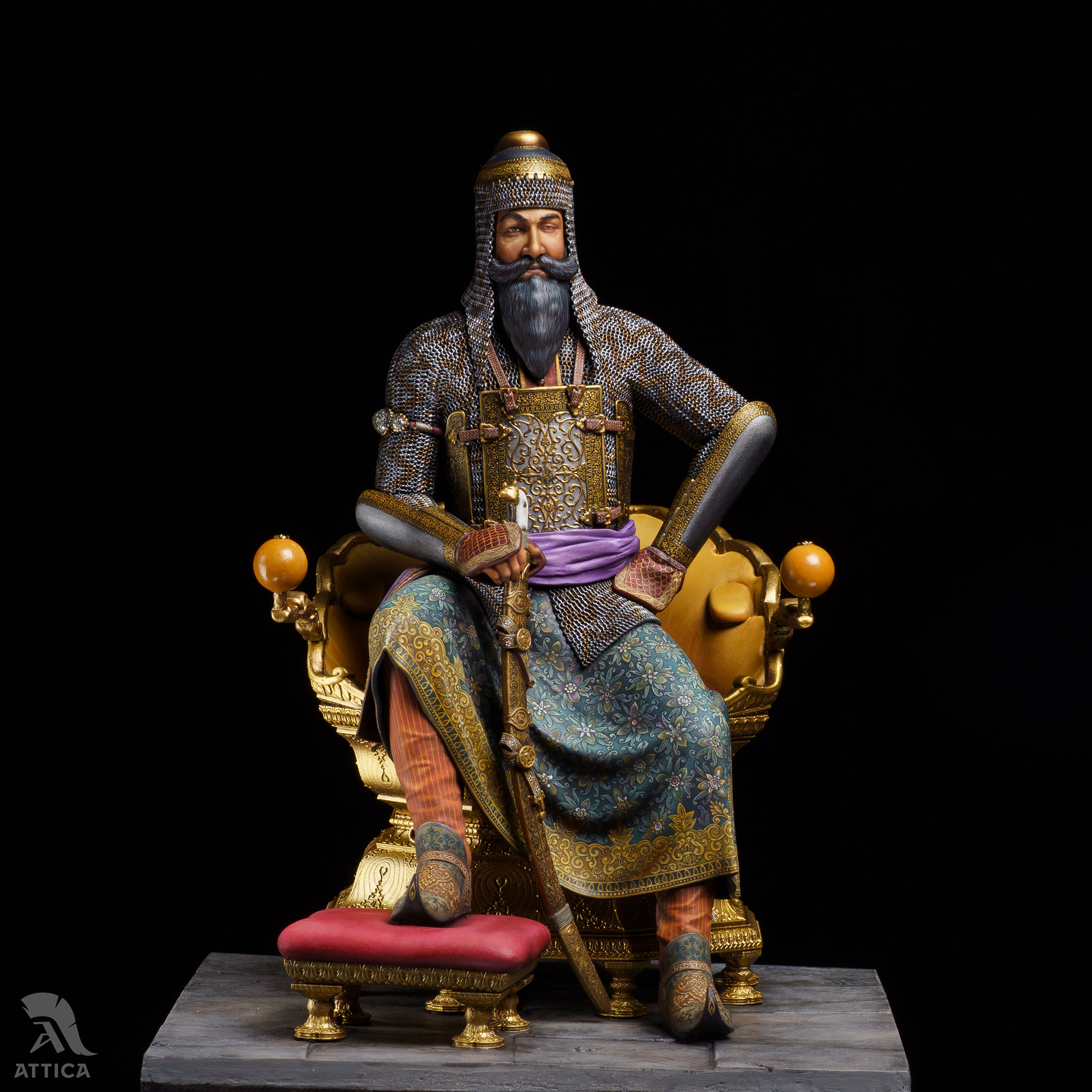
One-of-a-kind private commission Maharaja Ranjit Singh — A One-of-a-Kind Custom MiniatureA 1/6 scale historical portrait of the Lion of the Punjab, created entirely from scratch for a private collection. 1/6 scale 200 mm Resin Original sculpt Private collection
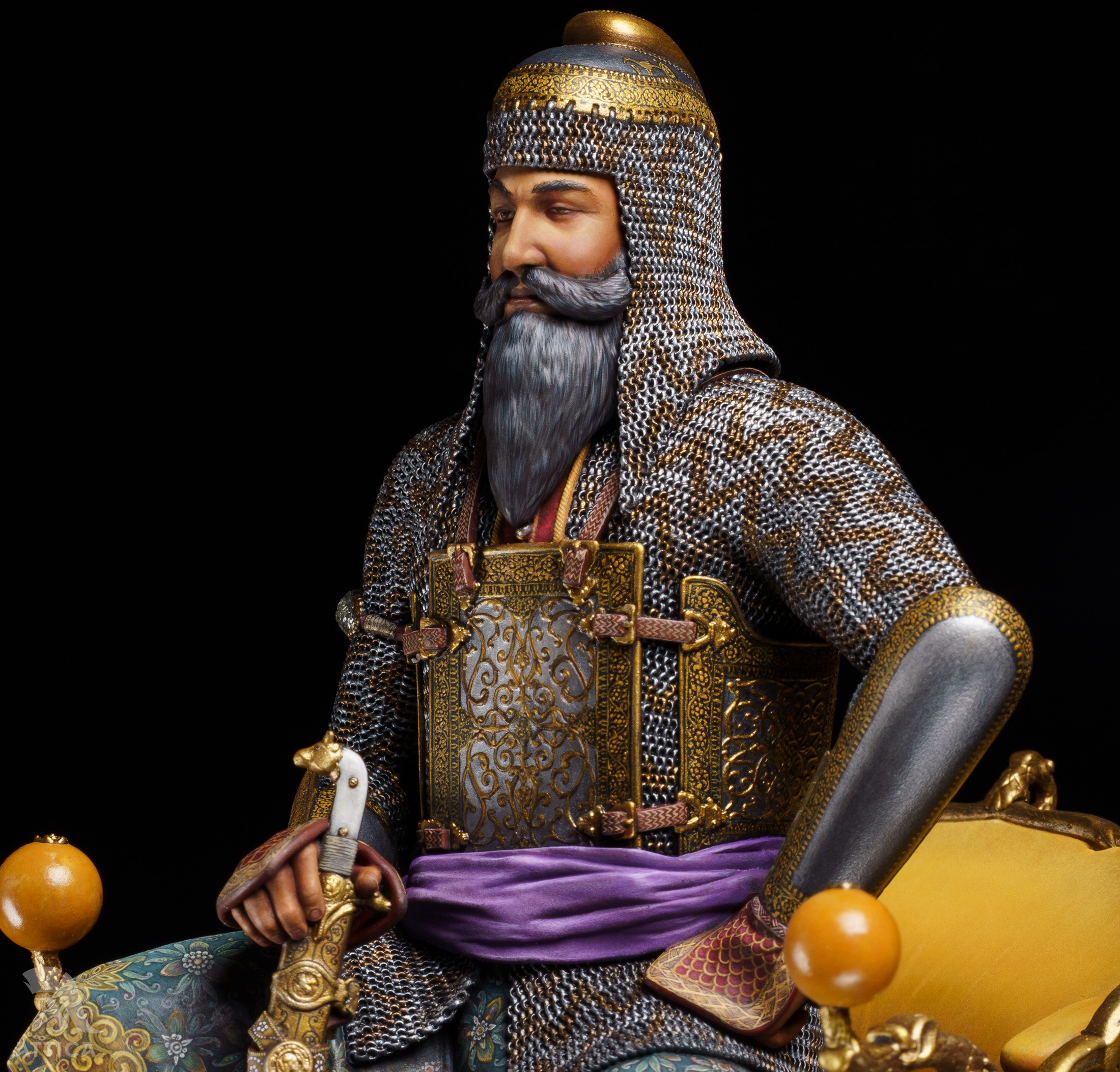
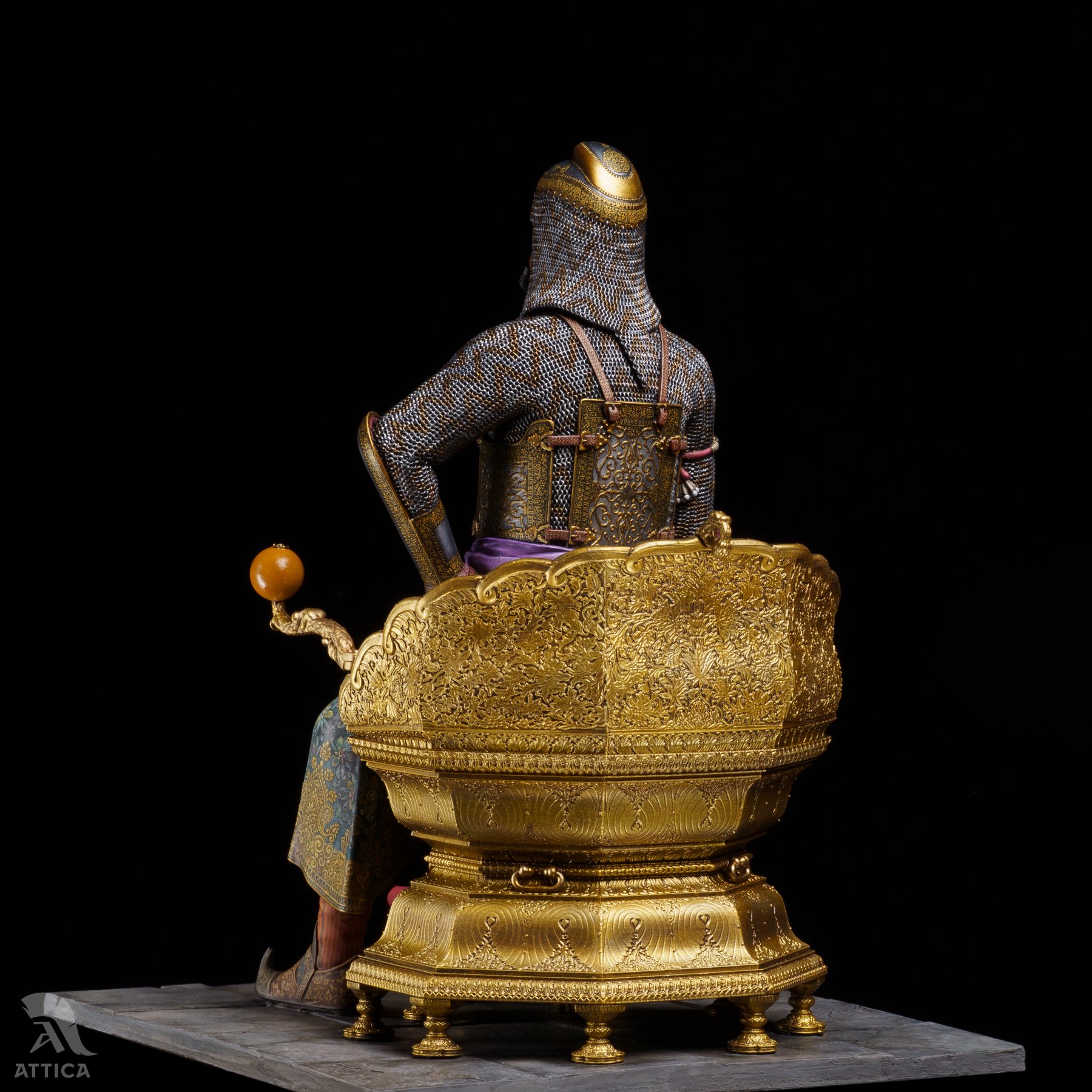
Maharaja Ranjit Singh, 1/6 scale, 200 mm. A one-of-a-kind private commission by Attica Miniatures. The Lion of the Punjab A ruler, a warrior, and the founder of an empireMaharaja Ranjit Singh (1780–1839) was known as the Lion of the Punjab — a ruler remembered for political will, military discipline, and extraordinary personal authority. He united the Sikh misls, captured Lahore as a young leader, and built one of the most powerful states in early 19th-century South Asia. His court in Lahore was famous for splendour, precious objects, fine weapons, horses, jewels, and textiles. Yet historical descriptions often note a striking contrast: the magnificence of the court around him and the restrained personal presence of the Maharaja himself. This contrast became central to our miniature: a sovereign seated on a gilded throne, yet shown as a warrior in armour. ![]() ![]() From idea to historical figure Why Maharaja Ranjit Singh?The project began with the client’s wish to create a figure connected with the history of India — not a decorative fantasy subject, but a historical personality whose influence was real and lasting. The client had a particular interest in Sikh history and culture. After discussing several possible figures, we suggested Maharaja Ranjit Singh: a ruler, commander, unifier, and founder of the Sikh Empire. Our aim was to portray him as both a confident sovereign and a warrior. That is why he is shown seated on his throne, but dressed in armour — calm, powerful, and fully aware of his authority. Project details A single piece for a private collectionSubjectMaharaja Ranjit Singh
Scale1/6, 200 mm
MaterialResin
EditionOne-of-a-kind
SculptorVladimir Sychev
PainterElena Aksenova
CollectionPrivate collection
StudioAttica Miniatures
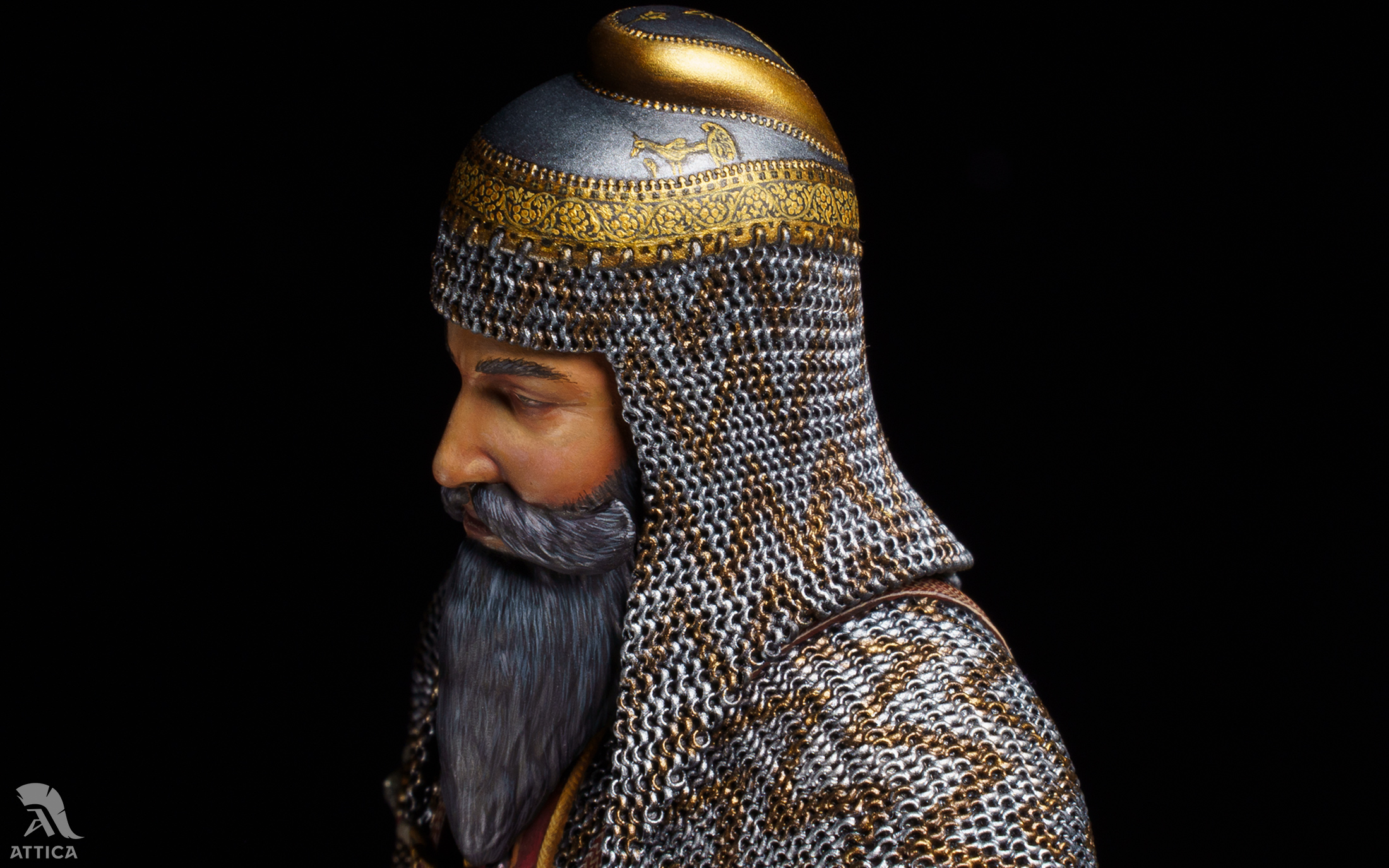
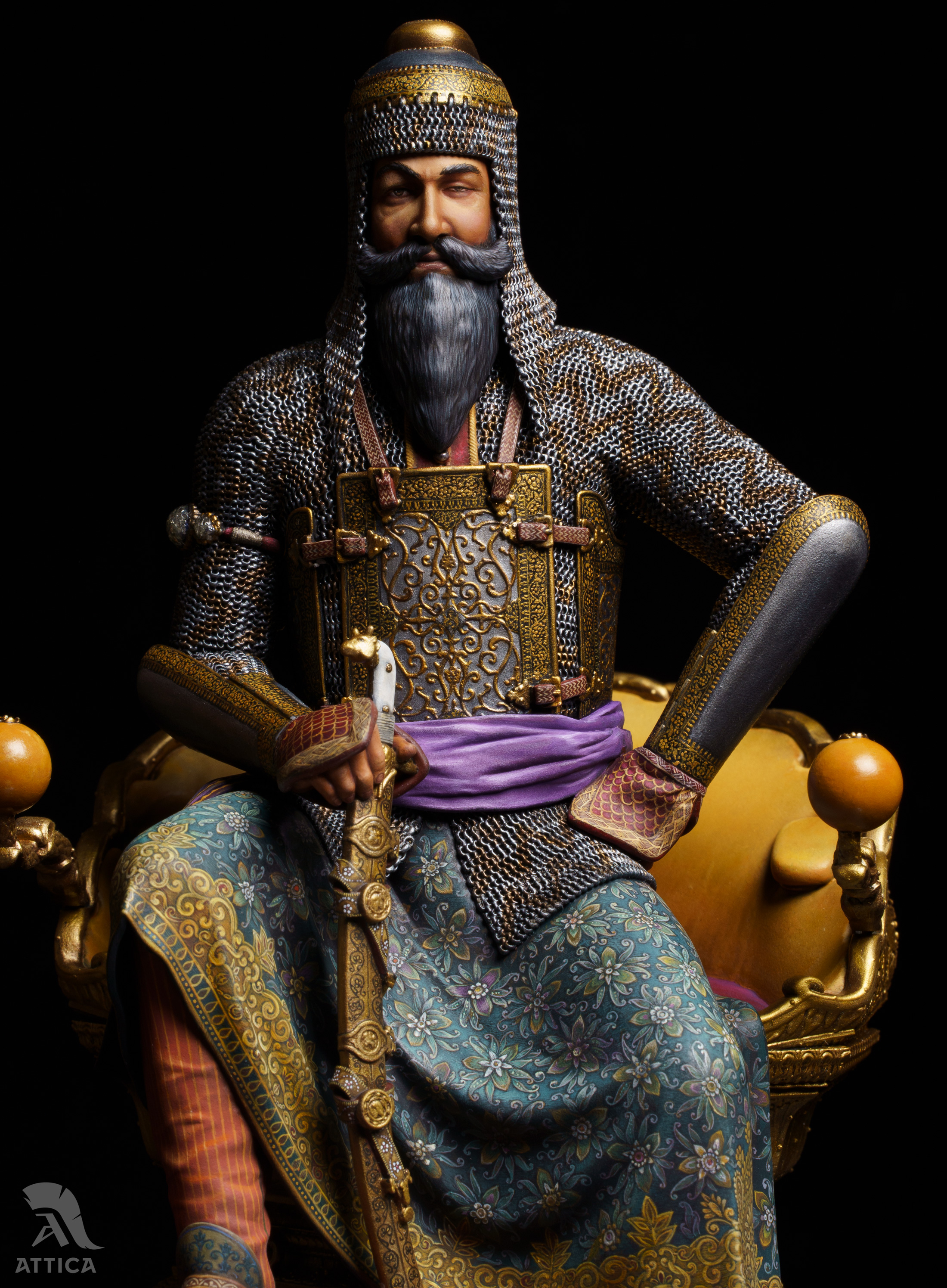
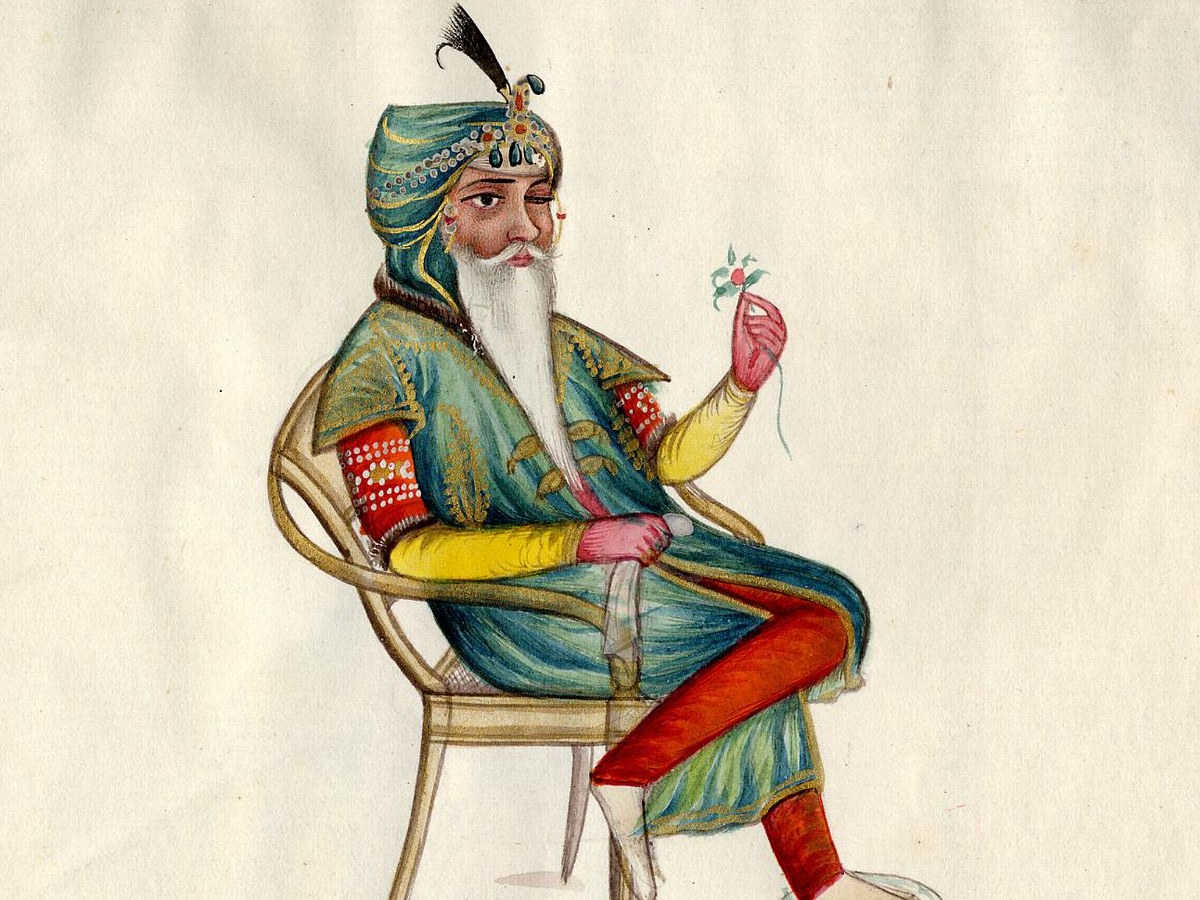
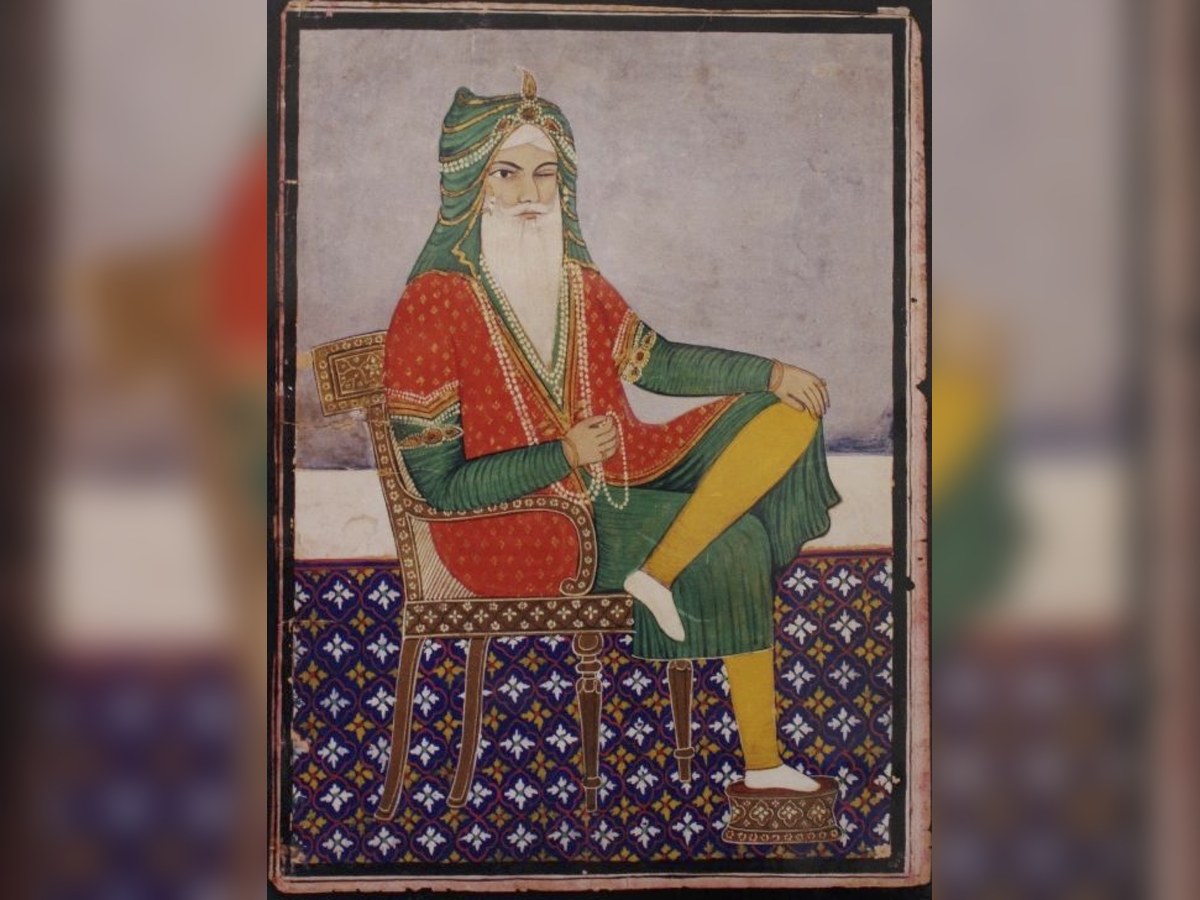
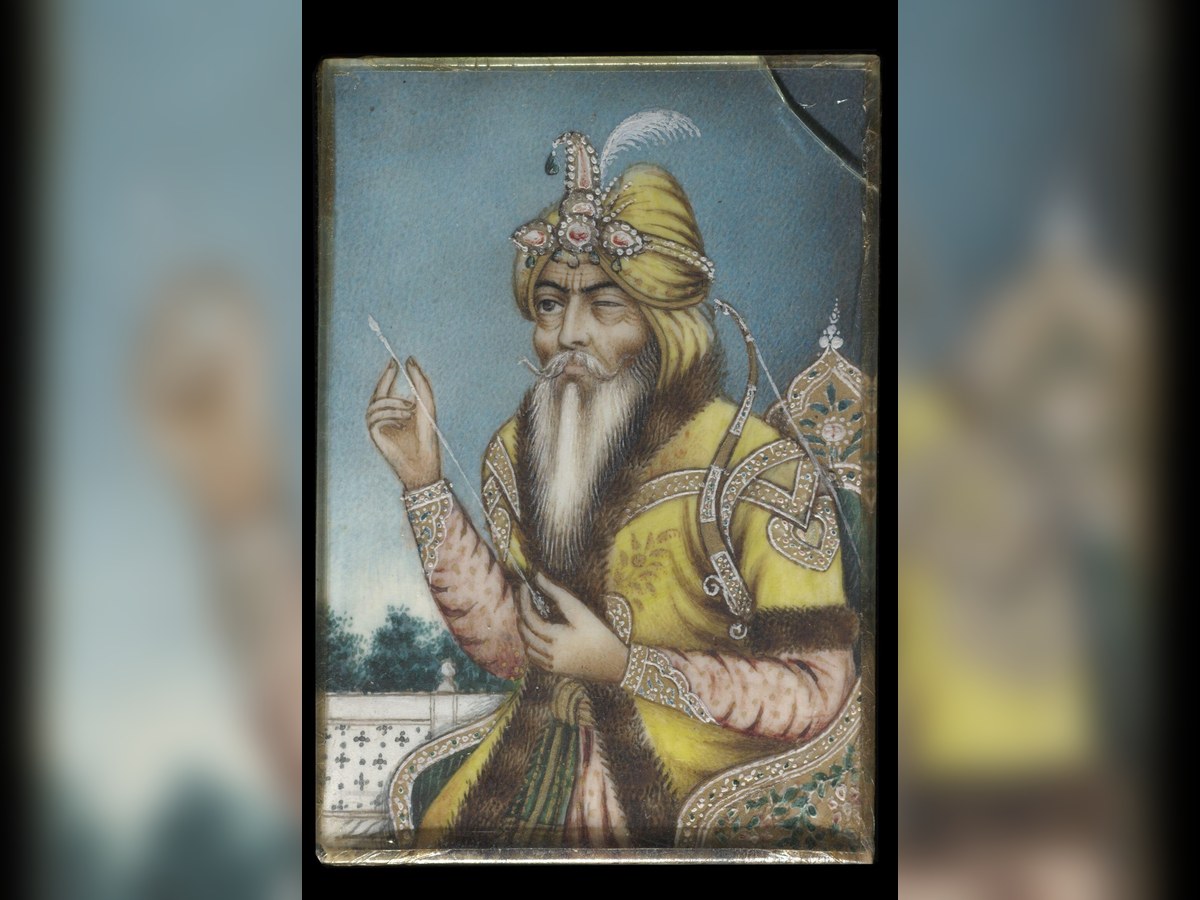
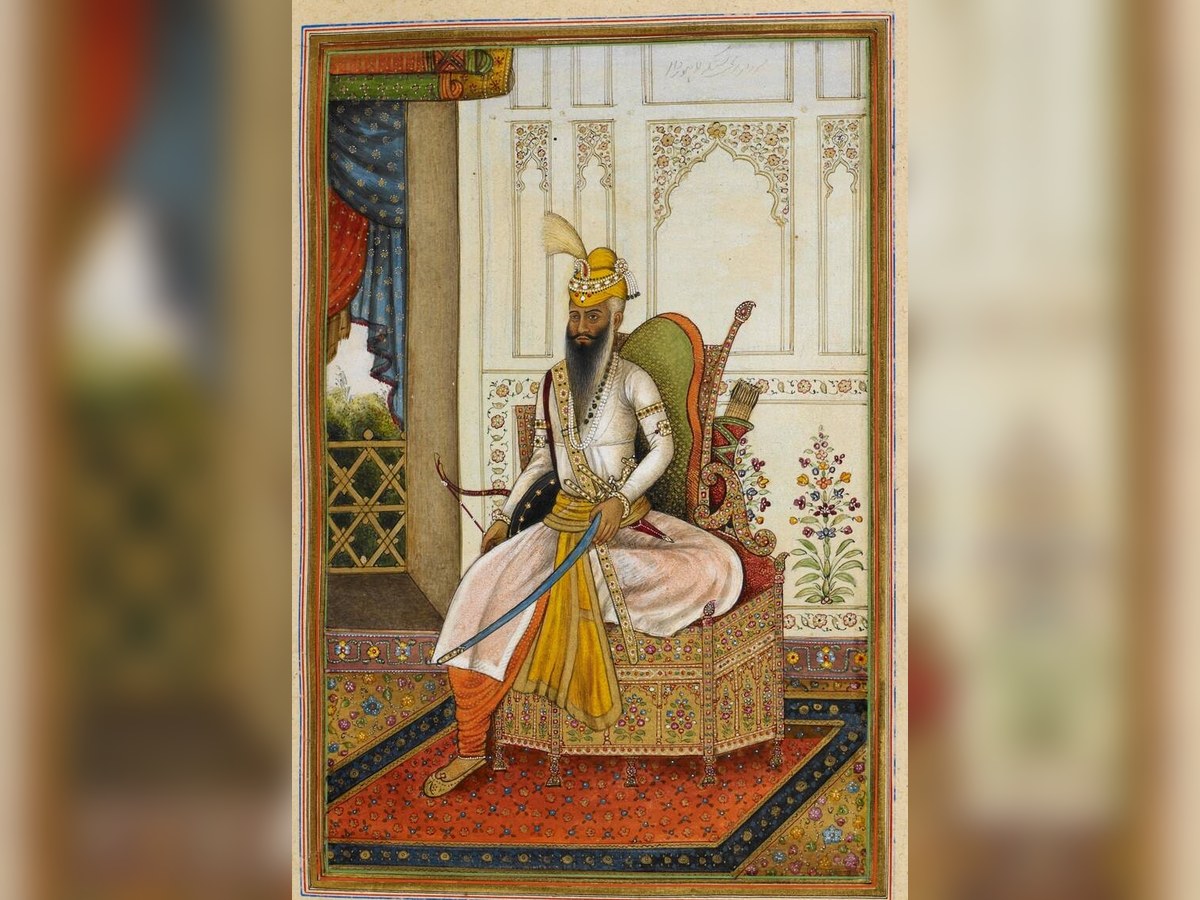
This miniature exists as a single piece, created for a private collection. Every element — the figure, throne, armour, sword, footwear, and accessories — was sculpted from scratch specifically for this project. Portrait and presence Confidence and inner strengthTo approach the portrait, we studied contemporary and near-contemporary images of Maharaja Ranjit Singh from museum collections and historical publications. The goal was not to idealise him, but to preserve his recognisable presence: the beard, the calm expression, the damaged left eye, and the quiet authority of a ruler who did not need theatrical gestures. His left eye was treated with restraint. It is only slightly closed — enough to suggest the historical injury, but without turning the portrait into caricature. Historical portraits helped define the expression, beard, damaged eye, and overall presence of the miniature. Add a small reference strip here only if publication rights allow it.
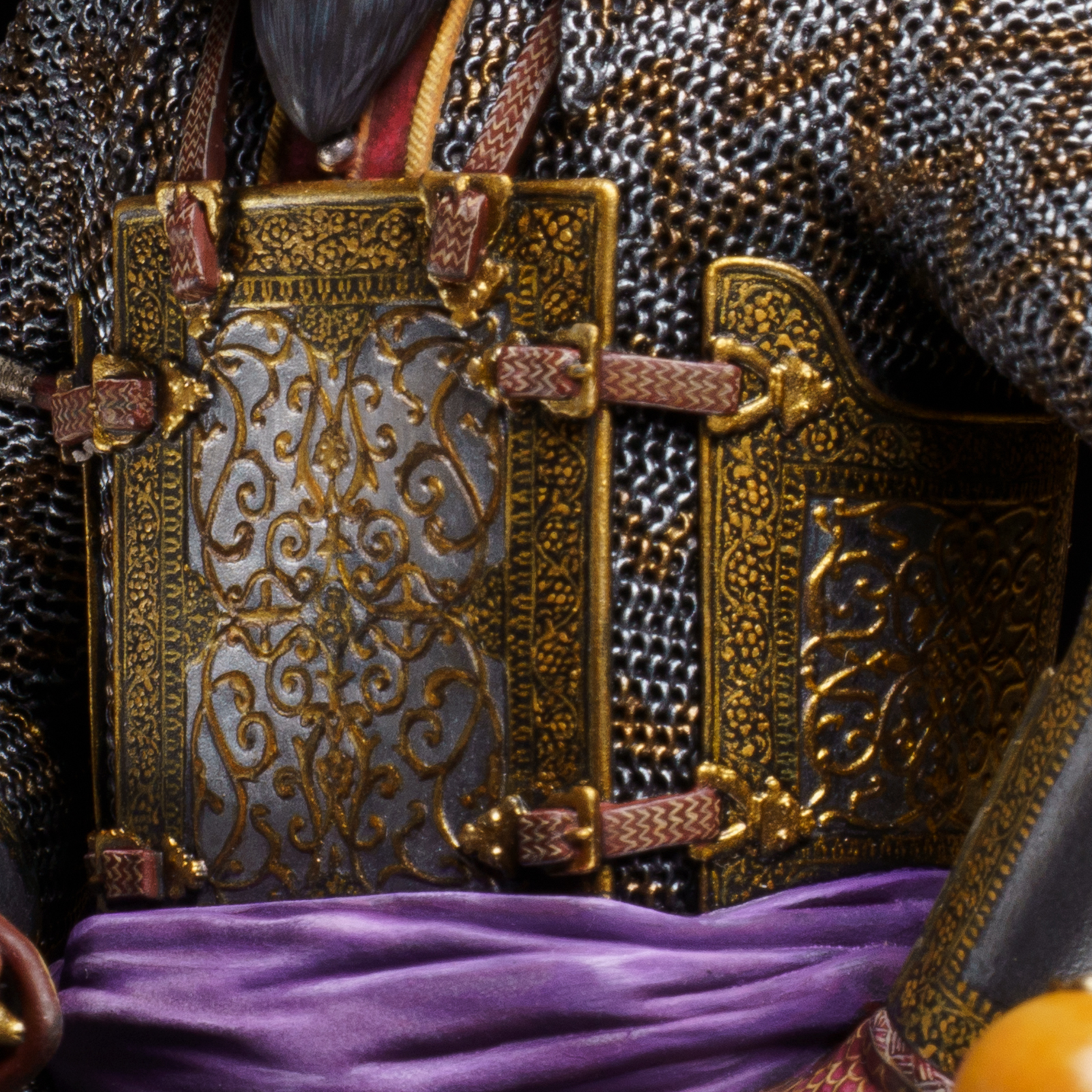
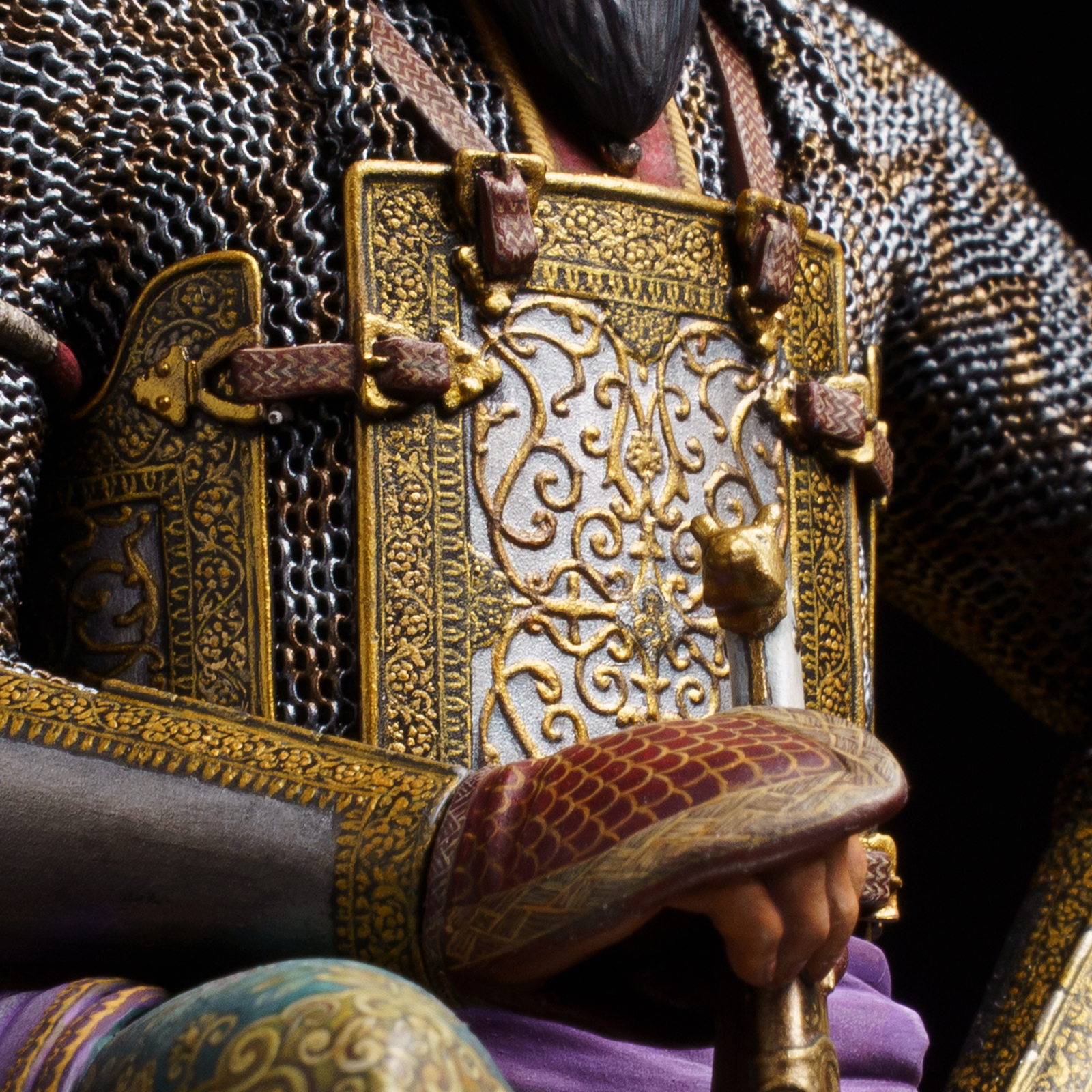
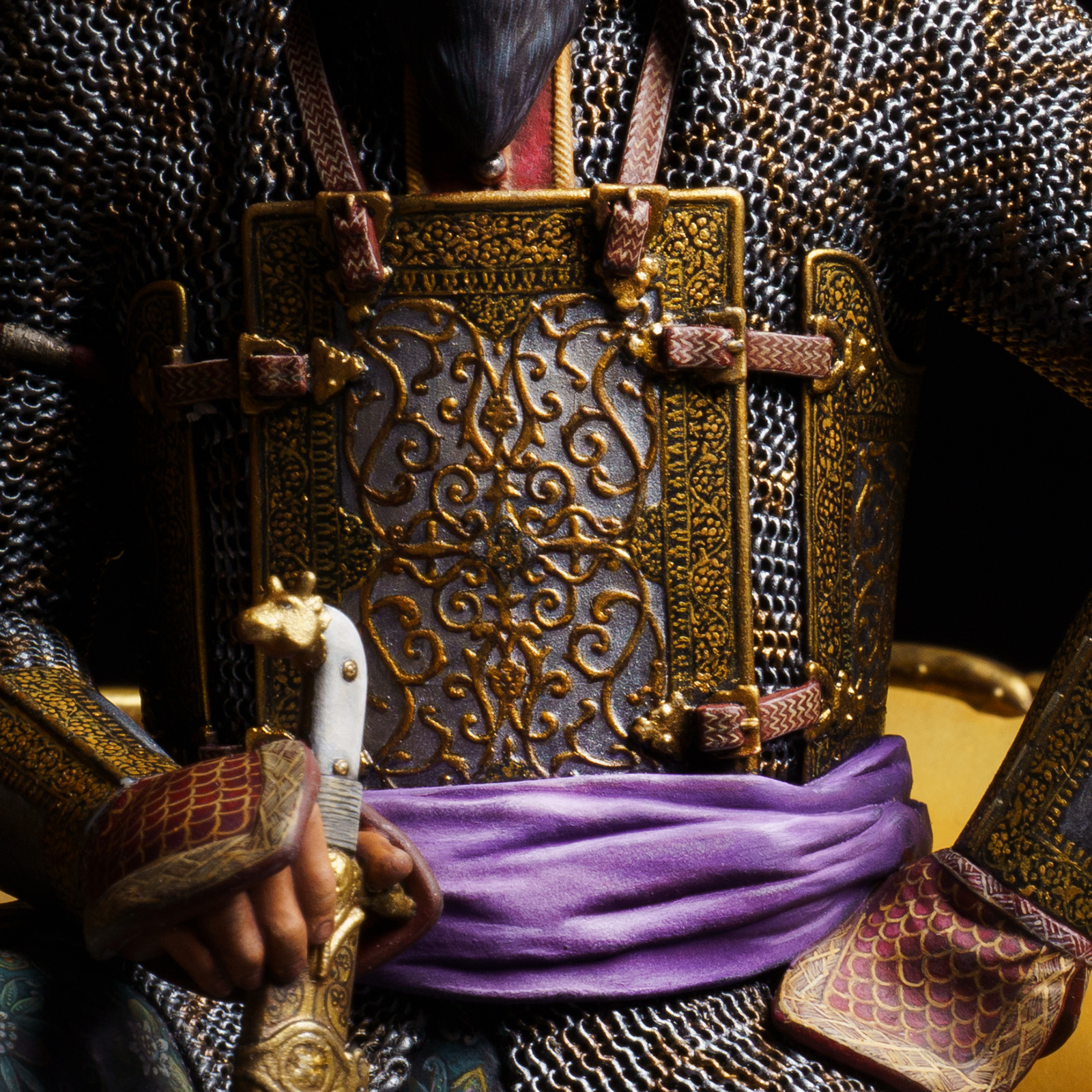
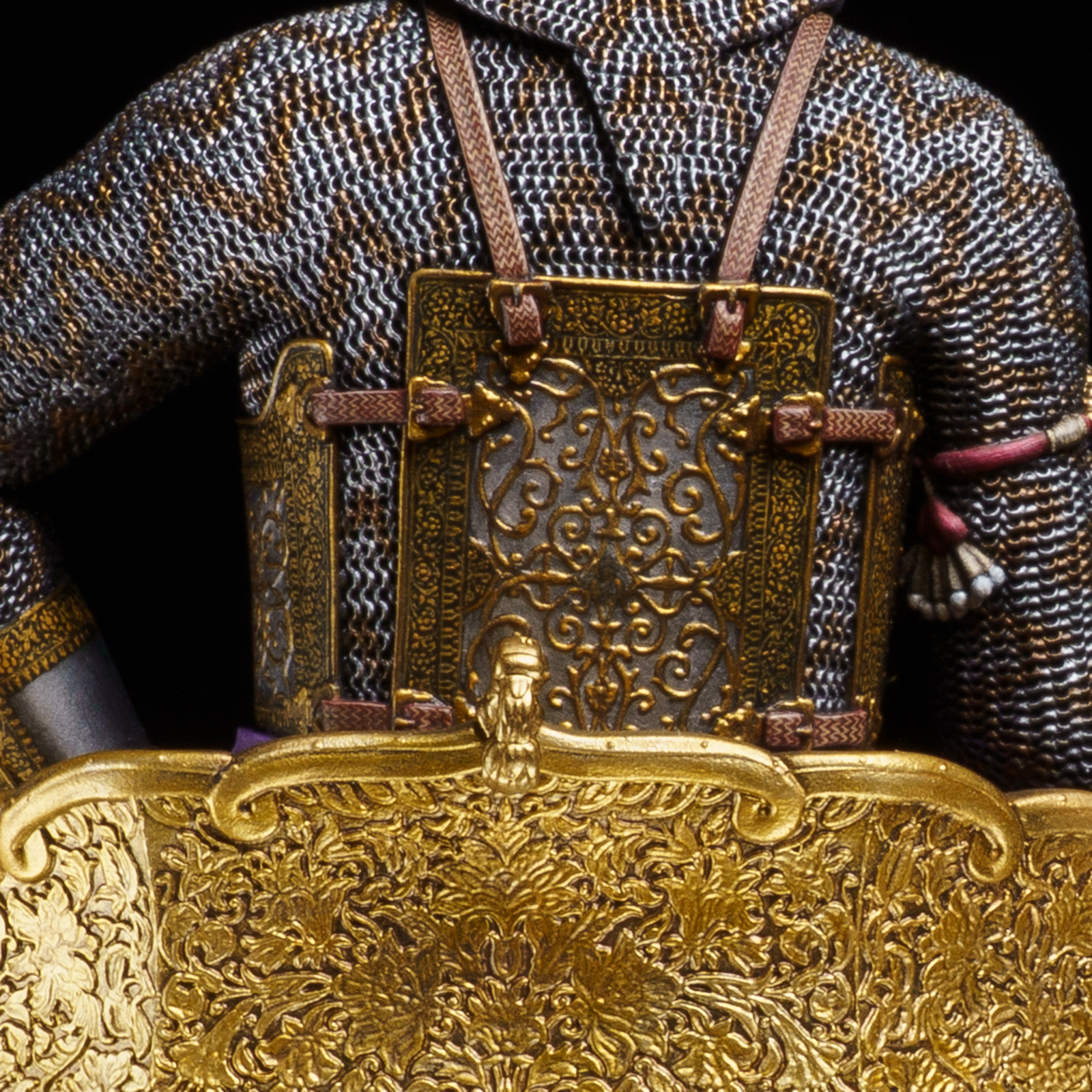
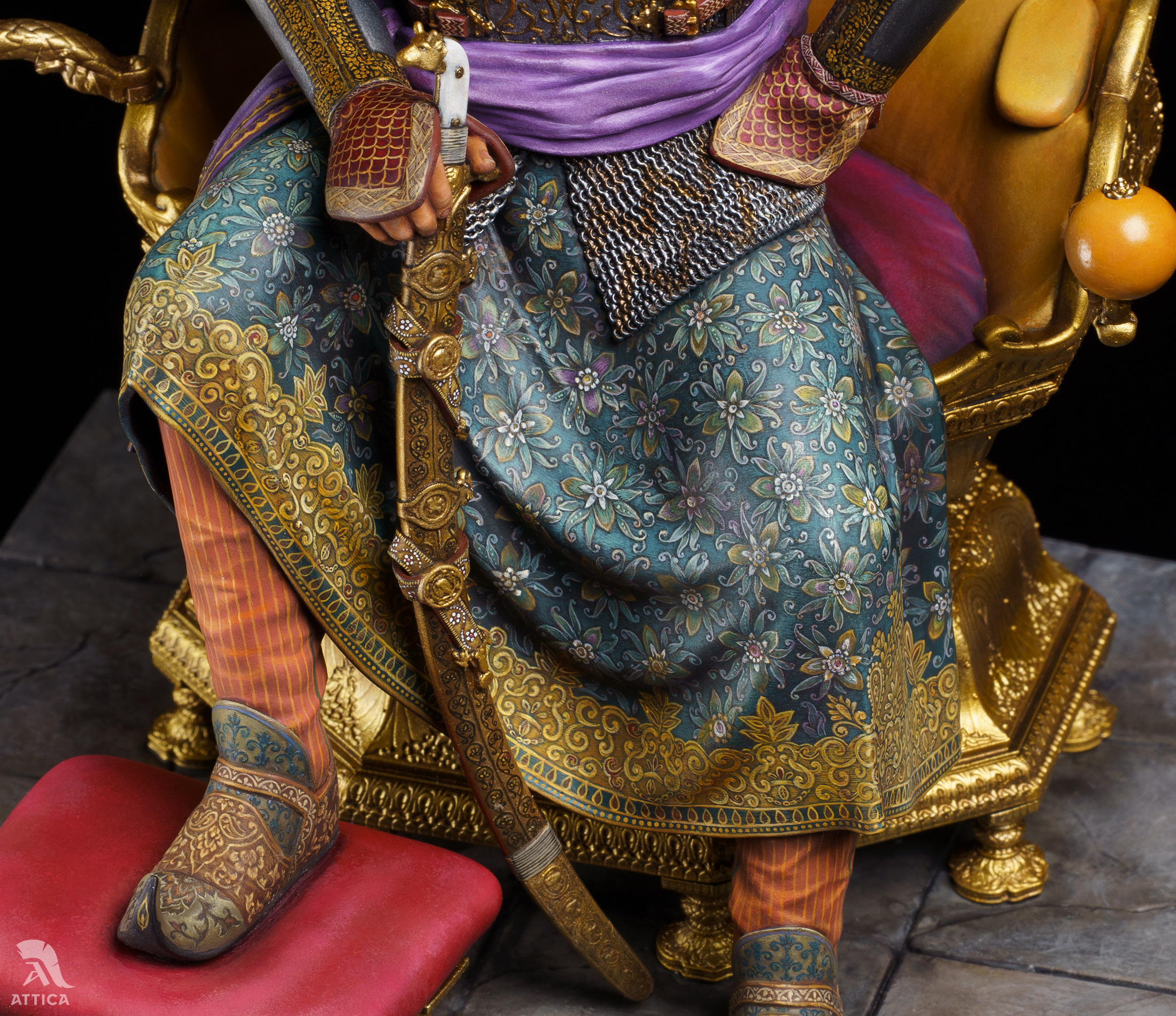
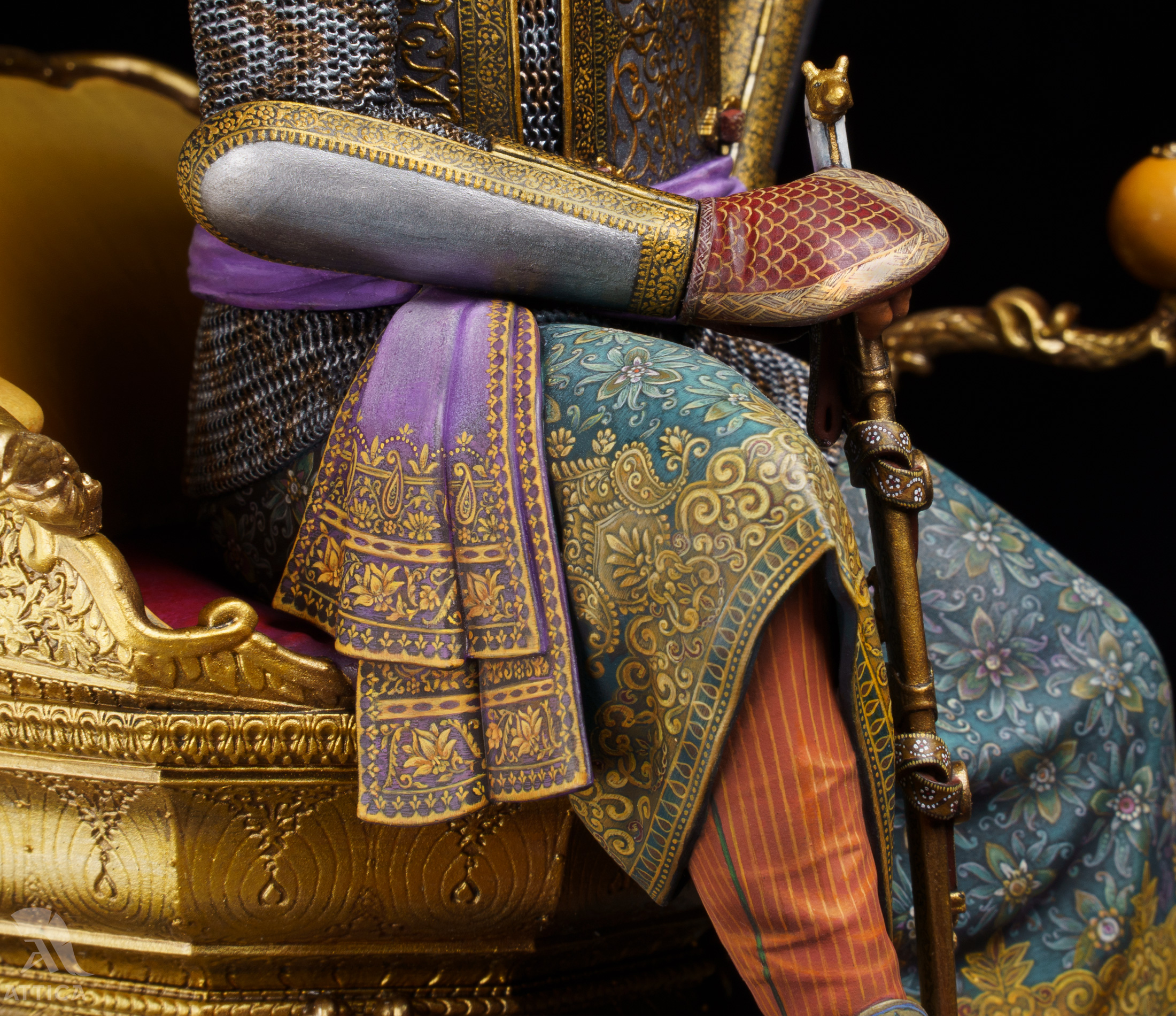
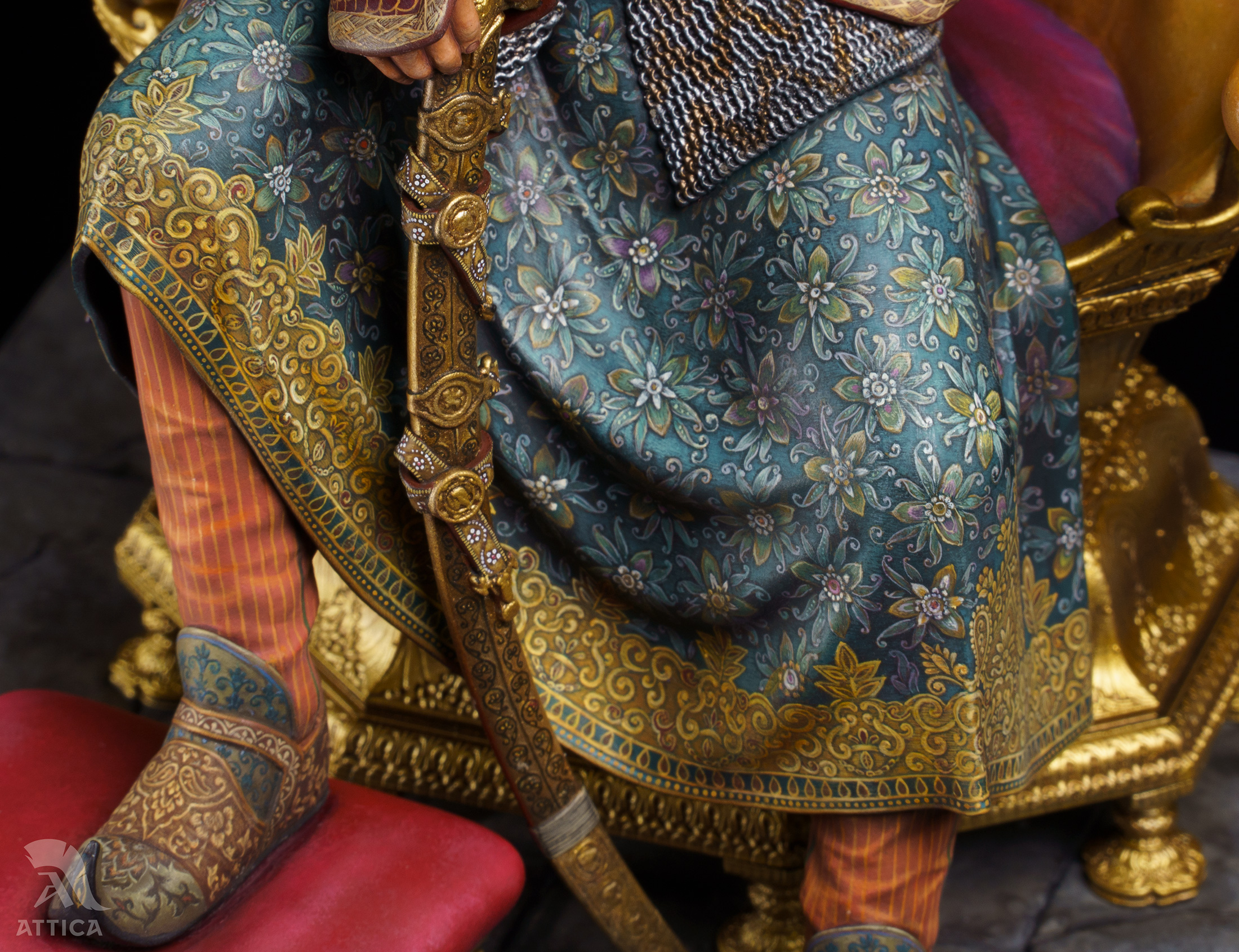
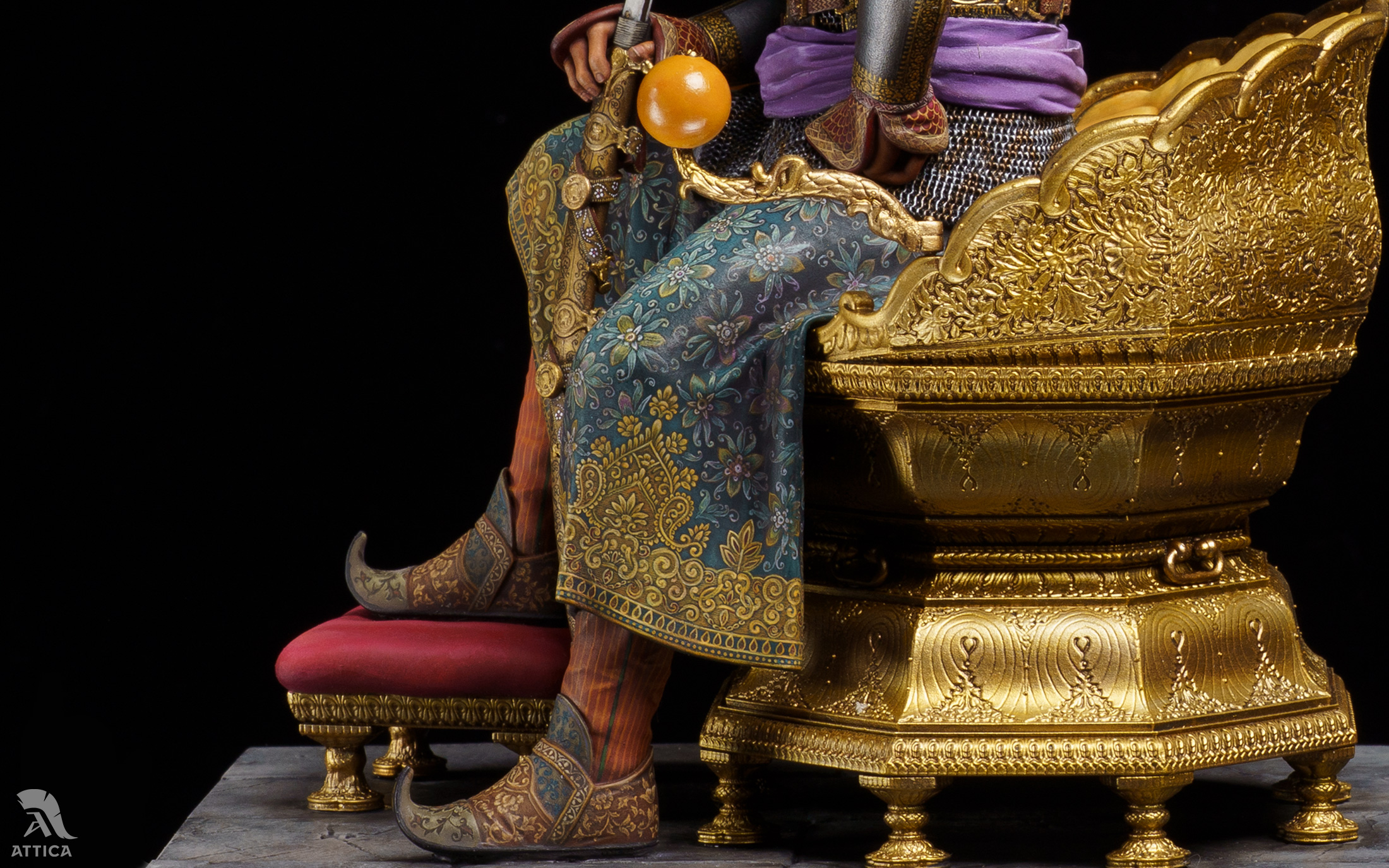
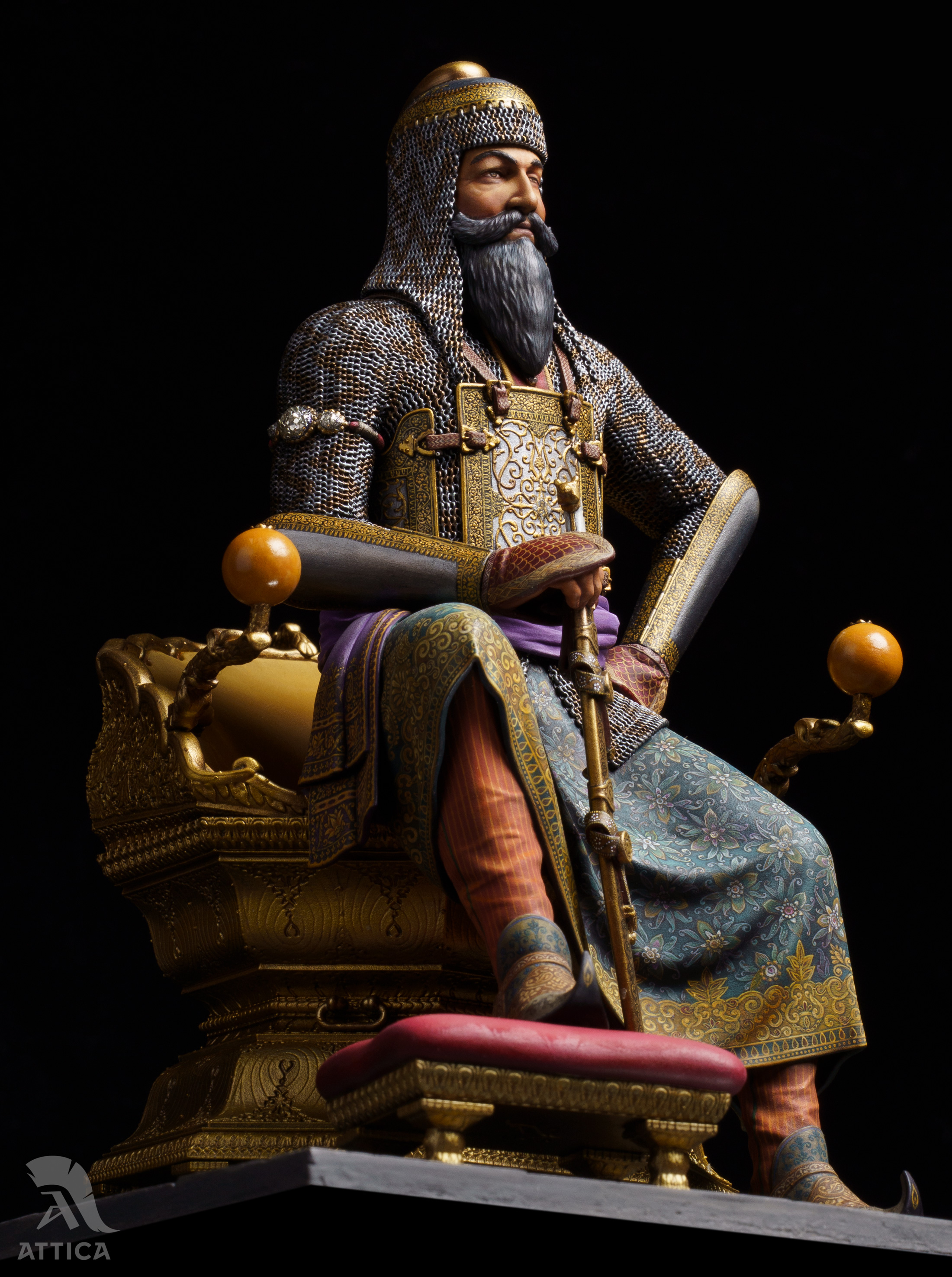
![]() ![]() ![]() ![]() ![]() The throne A surviving royal object recreated in miniatureAmong the surviving objects associated with Maharaja Ranjit Singh, the throne offered one of the strongest visual references. It immediately defines the figure not only as a warrior, but as a sovereign. Because the original throne has survived in remarkable condition, we recreated it almost in full. The only major missing elements were the round armrests. Based on historical paintings of the throne, we interpreted them as possibly made of jasper and recreated them as a historically grounded artistic reconstruction. The painting of the throne was also treated with special care. The gold was not painted as a single flat metallic colour. It was built with lighter highlights, deeper shadows, and subtle tonal transitions to suggest the richness and movement of gold leaf. ![]() Throne reference slider 1 / 3 Museum reference REF_THRONE.jpg The surviving throne of Maharaja Ranjit Singh Use a licensed museum image or an image allowed for publication. Miniature reconstruction THRONE_DETAIL.jpg Attica Miniatures, 1/6 scale Gold tones, relief, and missing armrests interpreted in miniature. Historical painting REF_THRONE_PAINTING.jpg Historical image showing the throne A second reference slide can compare the missing armrests. Sculptural decision THRONE_ARMRESTS.jpg Armrests reconstructed as an artistic decision Useful for explaining where documentation ends and interpretation begins. Material reference GOLD_LEAF_REFERENCE.jpg Gold surface and tonal variation A close reference for gold texture and ageing. Painting result THRONE_GOLD_PAINTING.jpg Painted gold in miniature Shows layered highlights and shadows on a small surface. ![]() Armour as faith, power, and identity The symbolic cuirassThe armour was not treated as a generic exotic costume. One of the most meaningful references was a surviving chahar-a’ina cuirass bearing a portrait of Guru Nanak, the first Sikh Guru. This type of armour — also known as char-a’ina, or “four mirrors” — consists of four curved plates worn over mail to protect the torso. For the miniature, this detail was important not only visually, but symbolically. It connects the figure’s military image with Sikh spiritual identity — armour as protection, status, and faith. Because the portrait on the cuirass is very small in the miniature photos, this block works best with a museum reference image placed next to our armour shot.
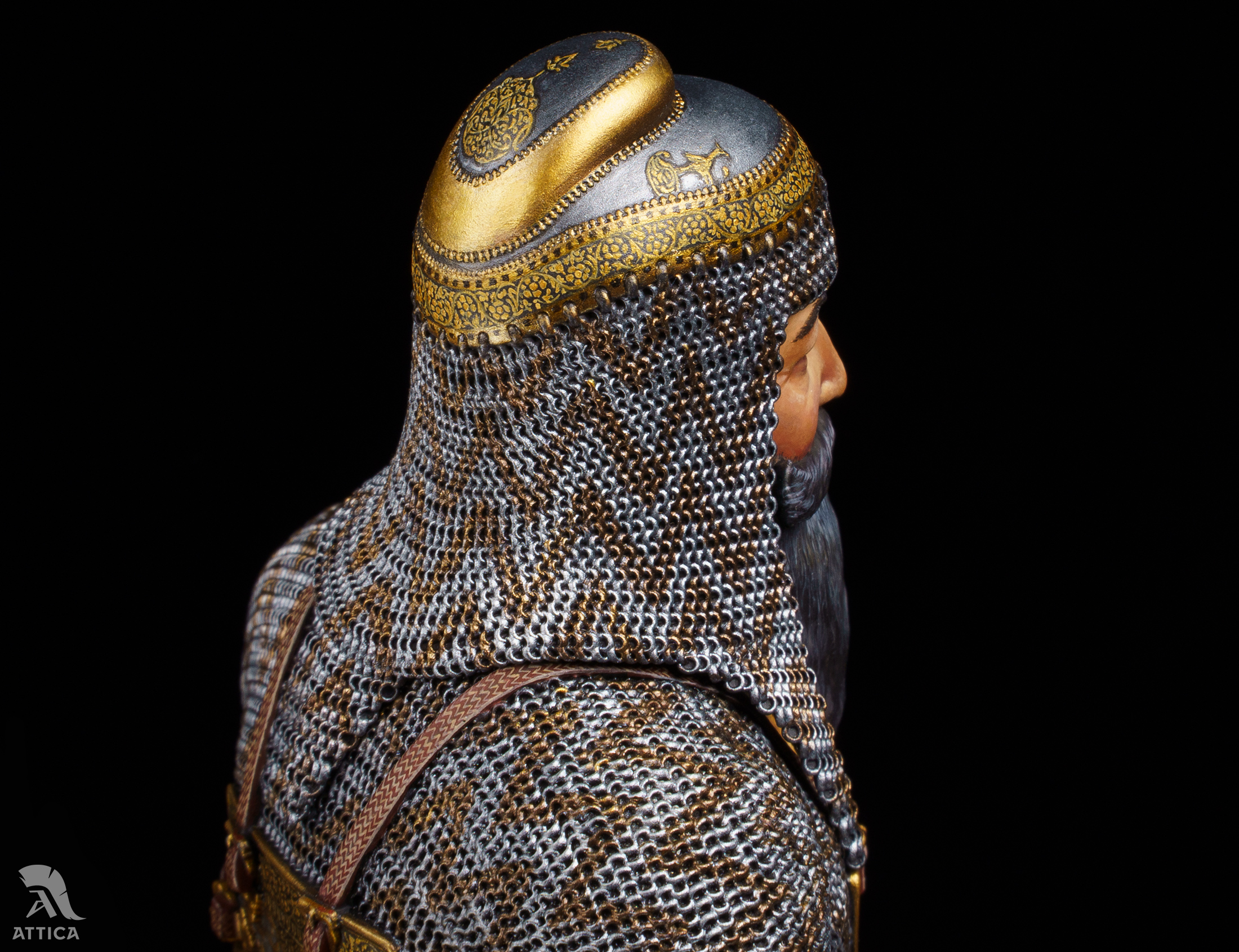
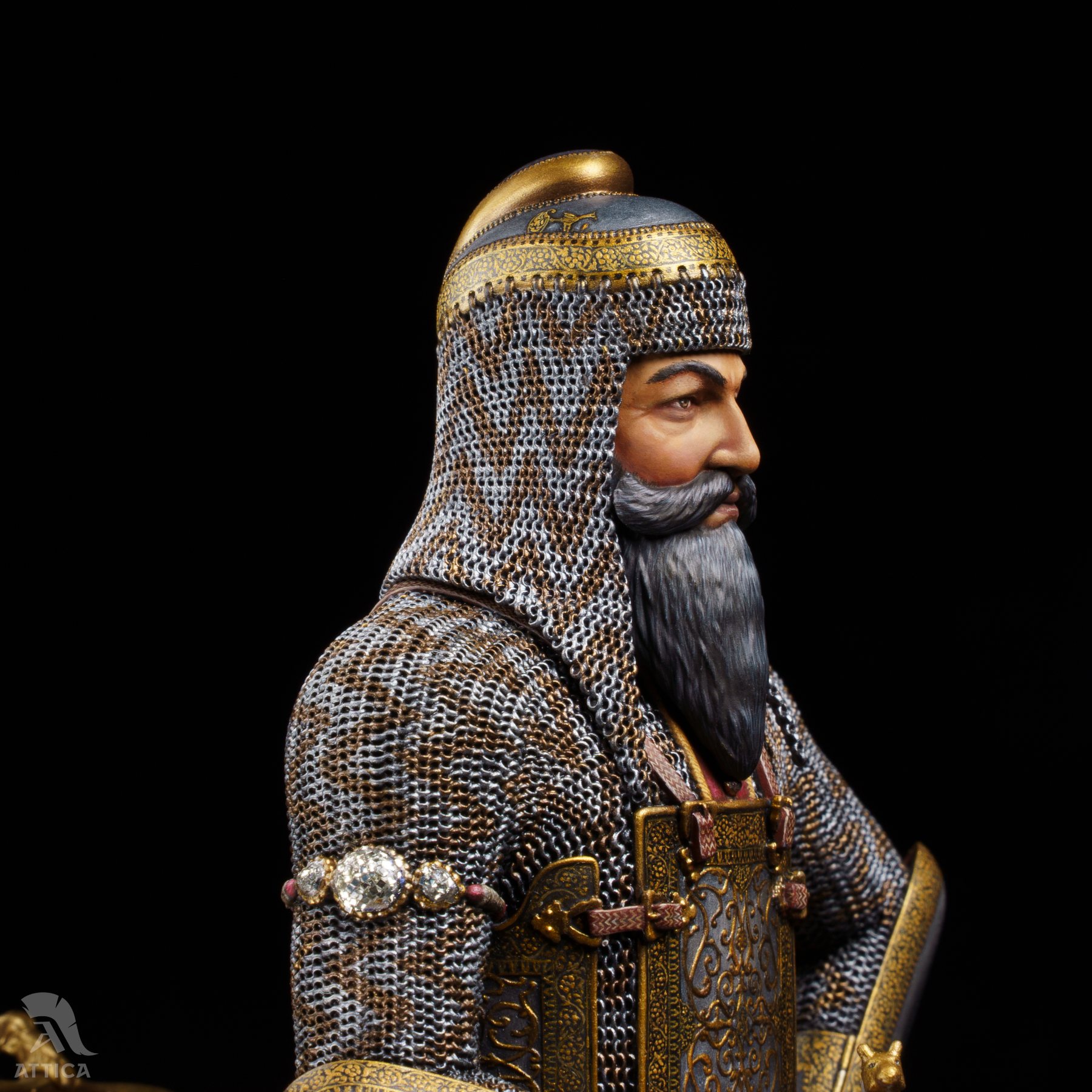
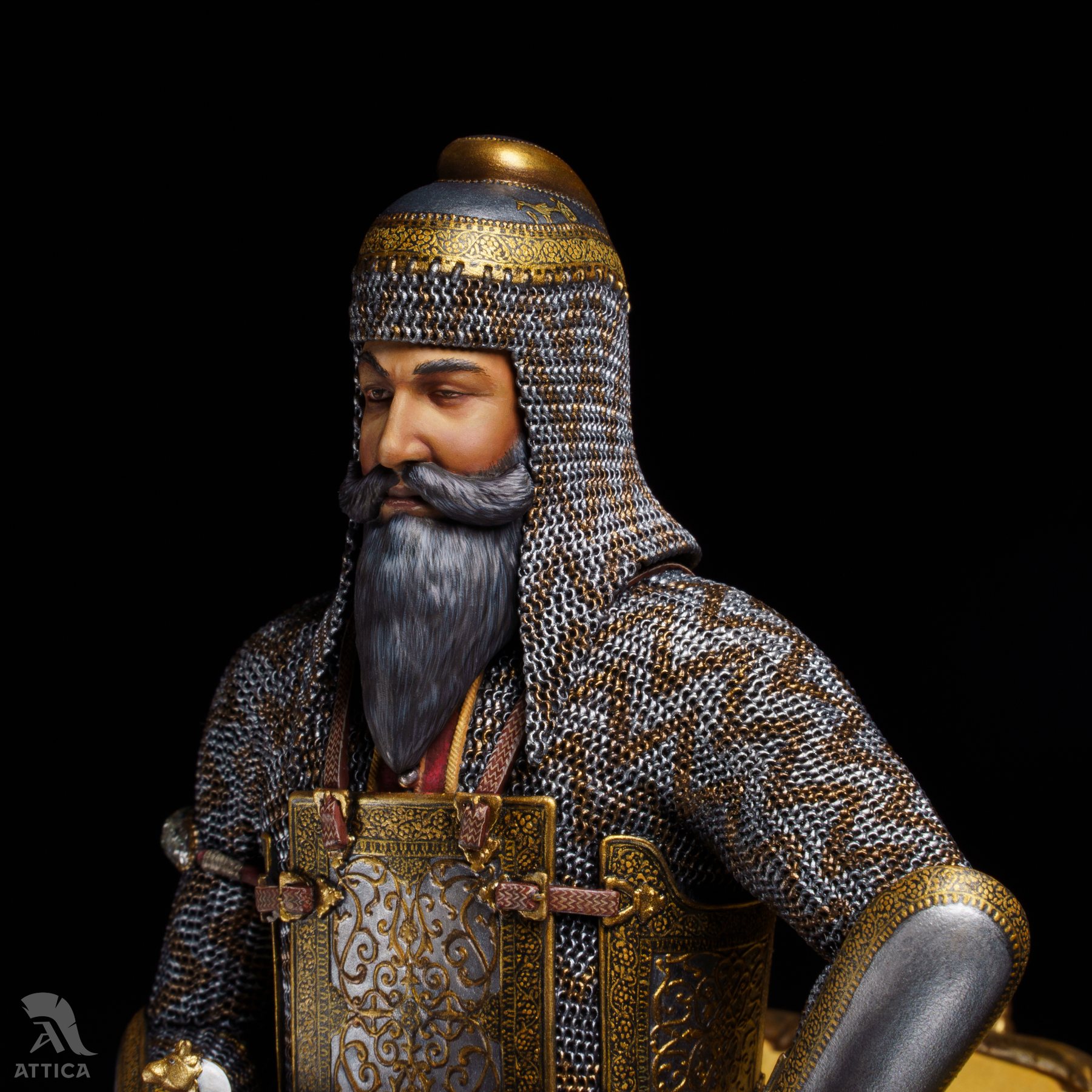
Armour reference slider 1 / 2 Museum reference REF_CUIRASS.jpg Chahar-a’ina cuirass bearing a portrait of Guru Nanak The Wallace Collection reference for symbolic Sikh armour. Miniature interpretation ARMOUR_PORTRAIT.jpg Armour and presence in miniature The cuirass is part of the wider image of Ranjit Singh as ruler and warrior. Detail reference REF_GURU_NANAK_DETAIL.jpg Symbolic portrait detail A separate slide can focus on the tiny portrait and its meaning. Painted detail CUIRASS_DETAIL.jpg Miniature-scale interpretation This lets the viewer see why the element matters, even when small. Helmet and mail Fine gold ornament and the rhythm of chainmailThe turban helmet was based on rare Sikh armour references. Its upper section was designed to accommodate the turban and topknot worn by Sikh warriors, while the gold floral ornament reflects refined metalwork associated with Lahore workshops. For the chainmail, we studied several historical patterns before choosing a zigzag design. Brass-toned inserts were not a fantasy decoration, but a historical feature of Sikh mail of the period. Although the mail was sculpted, its full decorative rhythm — including the zigzag structure — was created by the painter by hand, aligned carefully with the sculpted links. ![]() ![]() The Koh-i-Noor detail A small jewel with enormous historical weightThe Koh-i-Noor is one of the most famous diamonds in the world. For Ranjit Singh, it was not simply a jewel, but a symbol of power, prestige, and sovereignty. On the miniature, the Koh-i-Noor ornament is positioned on the right upper arm, between the shoulder and the elbow. We recreated the bracelet and the diamond as closely as possible to surviving drawings and the modern 3D reconstruction connected with the Anglo-Sikh Wars exhibition. If publication rights allow, add a drawing or 3D reconstruction of the Koh-i-Noor arm ornament as a small comparison card.
The sword A princely weapon of status and craftsmanshipThe sword was based on a richly decorated weapon associated with Maharaja Ranjit Singh. Its historical reference combines a watered-steel blade, a walrus-ivory hilt, gold, pearls, rubies, onyx, paste, and metal thread. In the miniature, the sword adds another layer to the portrait: it is not merely a weapon, but a sign of rank, court culture, and personal authority. ![]() Textile reconstruction From portraits to a unique painted garmentTextile elements required a different kind of reconstruction. Unlike metalwork, fabrics rarely survive in perfect condition, and the surviving museum textiles we studied did not belong to Maharaja Ranjit Singh himself. The costume was based primarily on portraits of the Maharaja made by his contemporaries. In one of them, he appears wearing a blue-green knee-length garment and red trousers; this colour combination became the foundation of our miniature. We studied museum textiles, regional embroidery, and period ornament, then created a unique pattern for the garment. It is historically inspired, but not copied from a single surviving object. ![]() ![]() ![]() ![]() ![]() Portraits defined the colour concept; museum textiles helped shape the language of ornament. ![]() Unique ornament Every flower painted individuallyThe blue-green garment became one of the visual highlights of the miniature. It is densely covered with flowers, yet none of them is repeated. Each floral motif was painted individually, turning the textile into one of the most delicate and time-consuming surfaces of the entire piece. The footwear followed the same principle as the textiles. Since no perfectly preserved museum example could be used as a direct model, we based the shoes on the characteristic curved-toe form and on embroidered textile materials known from regional references. The shoes were not copied from a single object. Their curved silhouette and richly embroidered surface were developed from several historical references, then reinterpreted into a unique ornament created specifically for the miniature. ![]() Created from scratch Original sculpting and team refinementThis miniature was not a conversion or an adaptation of an existing kit. Vladimir Sychev sculpted every element from scratch: the figure, throne, armour, sword, footwear, and all accessories. Revisions to the portrait and figure are a natural part of our process. At Attica Miniatures, the sculpt is developed by the whole team — the studio director, art director, lead painter, and sculptor — so that historical research, artistic composition, portrait likeness, and technical execution come together before the painting begins. Finished miniature A historical figure reconstructed through objects, portraits, and detailThe completed miniature brings together portrait study, museum references, original sculpting, textile interpretation, and hand-painted detail. It is a single piece made for a private collection — a historical figure reconstructed not through one source, but through a network of surviving objects, portraits, and carefully interpreted details. HERO_FULL.jpg Full view of Maharaja Ranjit Singh miniature FACE_CLOSEUP.jpg Face close-up THRONE_DETAIL.jpg Gilded throne detail HELMET_DETAIL.jpg Helmet and chainmail detail GARMENT_DETAIL.jpg Floral garment detail SWORD_FOOTWEAR.jpg Sword and embroidered footwear detail BACK_VIEW.jpg Back view with throne A one-of-a-kind 1/6 scale miniature of Maharaja Ranjit Singh, created by Attica Miniatures for a private collection. Custom historical miniatures Have an idea for a custom historical miniature?Attica Miniatures creates bespoke historical and fantasy figures for private collectors worldwide. A custom project can begin with a historical personality, a portrait, a scene, a specific period, or a single powerful idea. Our studio can develop the concept, historical research, sculpting, accessories, painting, scenic base, and final presentation — from the first idea to the finished one-of-a-kind miniature. A custom miniature can begin with a single historical idea — and become a fully realised figure. |
|
|
| |